
Priest, pastor, and reluctant middle manager. Writing about where Gospel wisdom reconciles with the parish spreadsheet — creeds, committees, and scripture passages that turn out to be surprisingly good org theory.
I run a parish
Not just preach at one or visit one on Sundays; run one: payroll, a leaky roof, safe-environment training, a finance meeting I wasn’t ready for. And yes, Masses, confessions, spiritual counseling, and the occasional 2 a.m. phone call. Nobody warned me in seminary exactly how much of parish ministry is actually administration (that they share the exact same root should’ve been warning enough) and that administration, done badly, can quietly undo a lot of good preaching.
This newsletter is where I think through that interplay out loud: where theology meets best business practices. Call it synergy, if you want a business management term, of how each aspect relates to the other. In effect, it means nurturing the Church as organ-ism: the one Body of Christ with many members (1 Corinthians 12), alive in a way no org chart can capture; without neglecting the Church as organ-ization, because a living body still has bones, and someone has to set them when they break: deferred maintenance, busted budgets, fractured friendships.
Reconciling the two, week after week, is most of what this newsletter is actually about. Some weeks it’s a Scripture passage moonlighting as management advice; other weeks it’s a story from the parish that just might double as a modern parable, filed down enough so that no one involved would recognize themselves in it; and some weeks it’s neither—just a straightforward field guide to the unglamorous mechanics of the job: sacramental registers, bulletins, and other clerical overhead written with less hedging and more of a here’s-what-actually-works voice, because that’s what the material calls for, not because I’ve suddenly gotten more certain about everything else.
I’ve noticed a habit in how I go about that reconciling, and it’s worth naming plainly rather than leaving it invisible: I keep reaching for the actual shape of a doctrine—the Trinity, the two natures of Christ, whatever the week happens to call for—and asking what it has to say about the thing sitting on my desk, rather than starting from the thing on my desk and looking around for a verse to decorate it with. Half in jest, I’ve started calling this the Chalcedon dynamic, after the council that worked out how to hold two natures together in one Person without blending them into some third thing or splitting them into two. It’s not a system I sat down and designed. It’s just where I keep ending up, article after article.
A word on the name
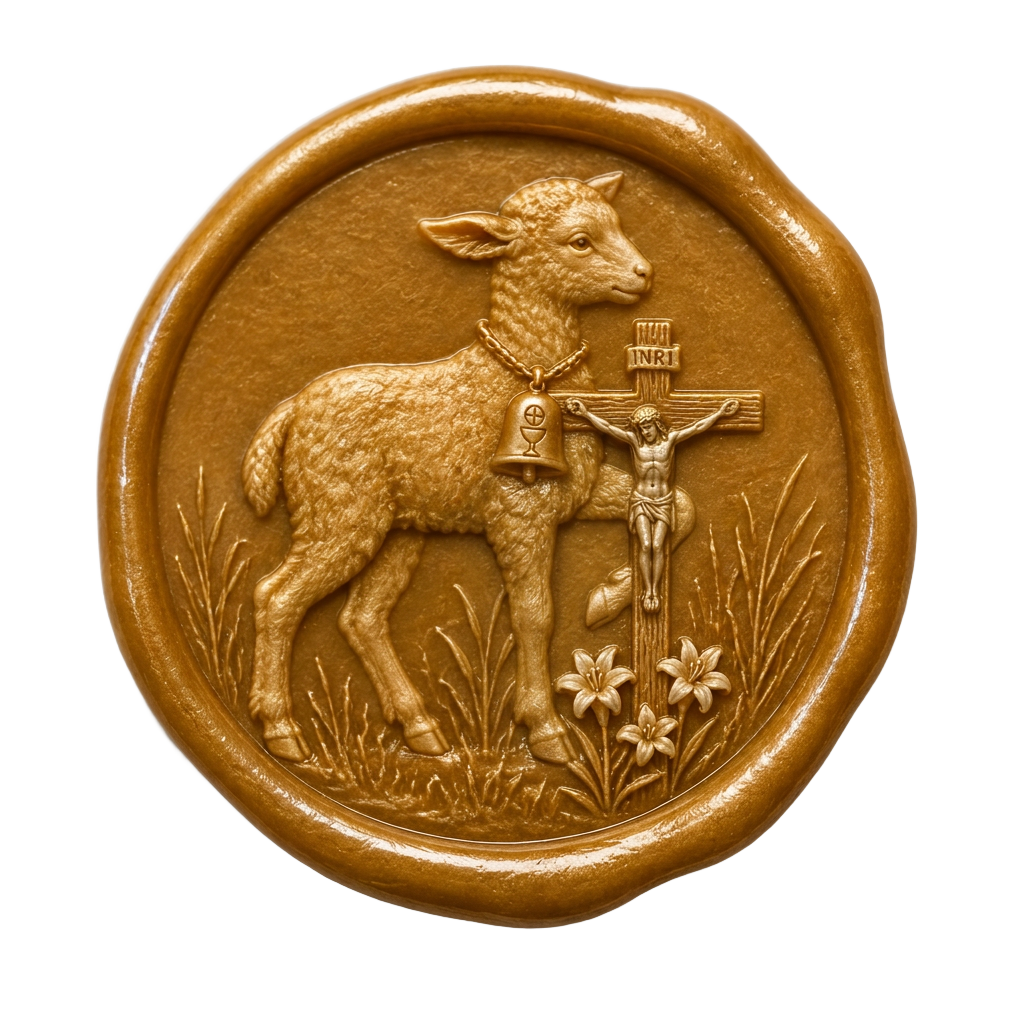
I’m a Catholic priest and pastor of a mid-sized U.S. parish writing under a pen name, partly for the freedom it gives me and partly because Titus Bellwether has turned out to be a voice I can think out loud in more easily than I can as myself. Titus seemed right: his work meant teaching sound doctrine, correcting error, and guiding ordinary believers in how to live well (Titus 2); about as clear a job description for parish administration as Scripture offers. Bellwether, for the lead sheep that wears the bell the rest follow; and also, usefully, a word for an early signal of where things are headed.
A note on AI integration
I use AI to draft, research, soundboard, and verify accuracy before putting stuff out there. Call it an associate pastor with no theological training and occasional hallucinations. Minus the ordination. Minus the paycheck. And minus, more to the point, any moral agency or conviction of its own on whether or not any word of this is true. It doesn’t believe anything. It processes patterns. I’m the one who edits it, tests it, and answers for it. Every doctrinal claim in this newsletter gets checked against actual Church teaching before I publish it, and I decide what stays, what goes, and what gets rewritten until it lands right, at least to my own ears. Whether that’s the right way to run a project like this, I honestly don’t know yet. It’s an iterative process I’m wrestling with in real time, and I’d rather tell you that than pretend I’ve got it figured out.
A note on how this changes
Every so often I come back and touch up a piece of this page, and if you’ve read it before, you might catch the difference. That’s not carelessness with an earlier draft. Every new piece I publish clears away a little more of the fog ahead of me and changes how I describe this project itself. The newsletter articles are refined over time, as well, linking back to ones that came before them, even ones published out of the order I first imagined for them. I expect that habit to keep growing rather than settle down. In short, I’m not describing a finished thing here. I’m describing a path I’m still walking, one published piece at a time, and this page gets redrawn whenever the road shows a little more of where it’s actually headed.
For the fence-menders
This newsletter isn’t an outlet for my complaints, nor a stage for false humility about my own competence. I suspect a lot of pastors, administrators, and parish staff are quietly doing hard, undiscussed work with no one to compare notes with.
New issues land weekly. Subscribe, and let’s compare notes.
Healthy sheep need clean sheepfolds.
Someone has to think about the fence.

© 2026 Titus Bellwether. All rights reserved. The essays, reflections, and original writing published here may not be reproduced, distributed, or republished — in whole or in part — without prior written permission. If you’d like to quote an excerpt, reprint a piece, or share it somewhere beyond a simple link, reach out at tbellwether@tuta.com — requests for reasonable use are welcome and often granted.
Copyright Acknowledgments
Scripture texts in this work are taken from the New American Bible, revised edition © 2010, 1991, 1986, 1970 Confraternity of Christian Doctrine, Washington, D.C. and are used by permission of the copyright owner. All Rights Reserved. No part of the New American Bible may be reproduced in any form without permission in writing from the copyright owner.
Excerpts from the English translation of the Catechism of the Catholic Church for use in the United States of America Copyright © 1994, United States Catholic Conference, Inc.—Libreria Editrice Vaticana. Used with Permission. English translation of the Catechism of the Catholic Church: Modifications from the Editio Typica copyright © 1997, United States Conference of Catholic Bishops—Libreria Editrice Vaticana.